Daikoku Wharf · Tsurumi-ku · Yokohama — Japan

Daikoku Parking Area, without the guesswork

A motorway rest stop on a man-made island in Yokohama Bay is the most famous car meet on earth — and the hardest famous place in Japan to actually reach. No station, no footpath, no taxi rank, no schedule, and a police closure whenever it gets too good. This is the guide to how it really works: the way in and (more importantly) out, which nights the cars come, what shows up, the rules that keep it open, and every bookable ride compared.

¥0
Entry, open 24 h
0
Stations, footpaths
404
Parking bays
~20:30
Typical closure hour
1989
Opened, with the Bay Bridge
46
Tours compared

TL;DR

  • You cannot walk, train or bus in. Daikoku PA is inside the expressway. The way in is a vehicle, and the way out at 23:00 is the real problem — which is why almost everyone without a car books a round-trip shuttle or a seat in a tuned JDM car. Full access guide →
  • Friday and Saturday from ~21:00 are the big nights — and the nights it gets closed. Weeknights are quieter and safer bets; Sunday morning is a different, daylight crowd of classics and supercars. Night by night →
  • Nothing is guaranteed. No official schedule exists, police shut the entrance without notice, and every honest listing says so. Book the format that suits you, then read what actually happens when it closes.

Daikoku is not an attraction, a show, or a venue. It is a very large motorway rest area that car owners in the Tokyo–Yokohama region have used as a meeting point since the 1990s, and that Fast & Furious: Tokyo Drift, YouTube and now Forza Horizon turned into a pilgrimage. Everything odd about visiting it — the access, the closures, the fact that the cheapest legal way in is a $50 van seat — follows from that one fact.

What Daikoku PA actually is

Daikoku Parking Area is a rest area on the Shuto Expressway where the Bayshore Route (Wangan, B) meets the Kanagawa Route K5 Daikoku Line, on the reclaimed Daikoku Wharf in Tsurumi Ward, Yokohama. It opened on 27 September 1989, the same season as the Yokohama Bay Bridge next to it, and it is the largest PA on the whole Shuto network: about 404 bays (341 cars, 59 large vehicles, 4 accessible). The spiral ramp that wraps around it — the loop you see in every drone shot — is the interchange, and it means the lot can be entered from Tokyo, Yokohama or Chiba directions.

Two things make it the meet, rather than any other rest area. Location: it sits where the Bayshore Route from Tokyo, the Yokohane line from Haneda and the Yokohama city routes all converge, so it was always the natural stop for the Wangan night-run crowd. And size: 400 bays means the meet can grow to something worth crossing the bay for — and, since around 2023, something big enough that the operator and police start closing the entrance when it does.

The way in — and the way out

There is no walk-in, no train, no bus.

Daikoku PA has no pedestrian entrance. The nearest stations (Namamugi, Tsurumi, Yokohama) are kilometres away with no footpath to the lot; the Yokohama city bus route 109 that shows up on map apps runs to the port terminals and fishing park on the wharf, not to the rest area, and only in daytime. People who try to walk the ramps or climb the fence get stopped — the Kanagawa Shimbun counted about ten fence-climbing incidents a month in late 2023, mostly foreign visitors, plus tourists stranded after a taxi dropped them and the lot closed.

So the visit is a transport decision before it is anything else. Four ways in, honestly compared:

Way inGets you home?Cost, roughlyBest for
Shared van shuttleYes — round trip is the product$47–65 ppSolo travellers, budgets, first-timers who want to see the meet, not ride in a car
Seat in a tuned JDM carYes — most add a drop-off in the 23 wards$90–170 ppAnyone who came for the R34 / RX-7 / Supra experience; the drive is half the night
Private car with a driver-guideYes — hotel pickup and drop-off$300–550 per groupCouples and trios who want their own car and their own pace
Taxi you keep waitingOnly if it waits — there is no rank inside¥20,000–35,000 rt (unverified)Yokohama-based visitors: it is ~10 min from Yokohama Station
Rental car with an ETC cardYes, if you are happy on the Shuto at nightrental + ~¥1,200–2,400 tollsConfident drivers with an IDP who also want Hakone or the Wangan themselves

The tour tier exists to solve the return leg. That is the whole business model, and it is why the cheapest guaranteed ride home — a $56 van shuttle from Tokyo whose pickup time shifts earlier on Fridays and Saturdays to beat closures — has more than 450 reviews. Full detail, including taxi fares, tolls, ETC and the one bus that fools everyone, is in Getting there.

Which night the cars come

Nobody publishes a schedule because there isn't one. What follows is the pattern that Japanese enthusiast blogs, tour operators' own pickup times and years of Reddit threads agree on — and the pattern the police respond to.

Steady

Mon–Thu

Locals from ~20:00, thinner but real; rarely closed. Cars come and go rather than hold a meet. Weeknight detail

Peak / risk

Friday

Fills from ~21:00. Operators pull pickups forward to 17:00 to get in before a possible closure. Friday & Saturday

Peak / risk

Saturday

The biggest night and the most-closed one; the busiest lots get cleared from ~20:30. Shuttles pick up at 16:00. Closure pattern

Different crowd

Sunday morning

~06:00–08:30: classics, supercars, mint JDM in daylight; the photographer's window. Sunday morning

Overflow

Holidays

New Year, Golden Week, Obon and three-day weekends overflow and close early. Holiday calendar

Weather

Rain

Rain empties the lot and no listing refunds for it. Nudge to a dry night. Ride-in tours are still a good drive.

Two calendar quirks worth knowing: the 7th of the month pulls in Supra and RX-7 owners, and 6 August is AE86 night — both can fill the lot on a weekday and trigger a closure. The full month-by-month view is on Meet nights & times.

Closures: what triggers them, what happens

Since roughly 2023 the defining feature of a Daikoku night is not the cars but whether the gate is open. The expressway operator (Shutoko) and Kanagawa police close the entrance temporarily when the lot overflows, when engines are revved, when cars park outside the bays or when the noise complaints start — typically from about 20:30 on the busiest evenings, never announced in advance.

Triggers

What gets it shut

Overflow beyond the bays · revving and burnouts · out-of-bay parking · noise (exhausts and stereos) · crowds in the driving lanes · big holiday nights. The rules that keep it open.

Pattern

When it tends to happen

Fri / Sat / holiday nights from ~20:30; a police enforcement sweep cited 20 modified cars in Nov 2020 and 43 in June 2025; the lot was closed through the morning of 3 January 2025. Dated timeline.

Your tour

What operators do

Every honest listing says Daikoku "may close without notice" and names a fallback — usually Umihotaru PA on the Aqua-Line, sometimes Tatsumi. A few charge extra for the detour. Who says what.

Toilets and the convenience store stay reachable during a closure; the car park does not. If your evening depends on Daikoku being open, go on a weeknight, go early, or pick a tour whose listing shows it has a Plan B — the ones on our Tatsumi & Umihotaru page.

What shows up

Not a fixed cast. On a good night the lot is a cross-section of the whole Kantō car world; on a wet Tuesday it is four Priuses and a lorry. These are the crowds you are most likely to meet, and where each one is more likely to be found.

Skyline GT-Rs (R32–R35)

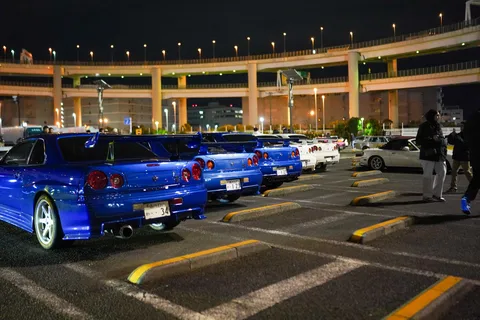
The reason the tours exist. R34s dominate the ride-in listings; R35s the premium ones. Skyline field guide · Ride in one →

Silvia, RX-7, Supra, Evo, WRX

The 90s tuner canon — and the cars operators actually put you in. The tuner canon · Seats from ~$90 →

Kaidō racers & VIP sedans

Sharknose kaido racers, slammed Celsiors and Crowns; more weeknight than weekend. What you're looking at

Supercars & classics (Sunday AM)

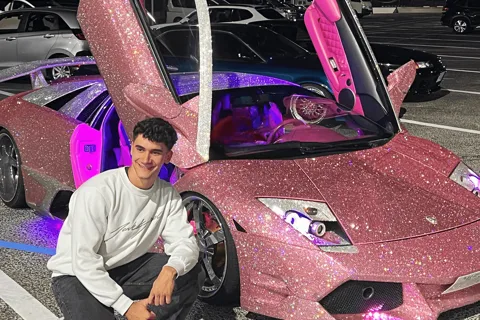
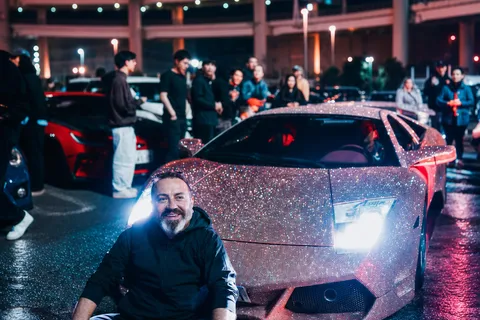
Ferraris, Lamborghinis and mint kyūsha in daylight; the photographer's Daikoku. Sunday morning · Tours that go →

Itasha, kei, vans, bikes

Anime-livery cars, kei sports cars, dekotora-adjacent vans and bikes make up the texture of a real night. The rest of the lot

Liberty Walk & widebodies

LBWK GT-Rs and Lamborghinis; two tours start at the Liberty Walk Tokyo showroom before Daikoku. Widebody culture · LBWK-start tours →

Which visitor are you?

Solo, on a budget

  • Book a van shuttle ($47–65) — it's the round trip you can't do by taxi
  • Go Mon–Thu for the lowest closure risk
  • Bring a jacket; the lot is on a windy pier
Under $100 →

Came for the R34

R34 tours →

Couple or trio

  • Per-group private listings ($300–550) beat three shared seats
  • Hotel pickup and drop-off included on most
  • Read per-person vs per-group before comparing — our price guide does it for you
Private tours →

Photographer

Photo etiquette →

Not really a car person

  • Any ride-in tour is a good Tokyo-at-night drive: Rainbow Bridge, Tokyo Tower, the Bayshore
  • Pick one with a Tokyo Tower stop and hotel drop-off
  • Honest verdict before you spend
Is it worth it? →

Driving yourself

Self-drive →

The rules that keep it open

Daikoku survives on the tolerance of a highway operator and a police force that would rather not be there. The unwritten code is short, and every closure of the last three years traces back to someone breaking it.

No revving, no burnouts

The number-one trigger. The lot's own social account asked people to stop after the January 2025 closure.

Park in a bay, and only in a bay

Out-of-bay parking is the second named cause of closures. Overflow = gate shut.

Ask before close-ups; never touch

Wide shots are fine. Owner and car close-ups: ask, accept no. Hands off, no leaning, nothing placed on a car.

Stay out of the driving lanes

It is a working car park at night. Standing in a lane for a photo is how people get hurt and how the lot gets cleared.

No drones

Flying over an expressway facility breaks Japan's aviation rules. Not a grey area.

Leave when told, without argument

Patrol cars clear the lot; the toilets and Lawson stay open. Arguing gets the next night closed too.

The longer version, including stereo noise, walking in, and what to do with children on the lot, is on Rules, photos & drones.

Beyond Daikoku: the rest of the circuit

Most tours are not "Daikoku only" — they string together the shops and rest areas that make up the Tokyo Bay night-car circuit. Knowing the pieces tells you what a listing's itinerary means.

Umihotaru PA

The rest area in the middle of Tokyo Bay on the Aqua-Line — the go-to backup when Daikoku shuts, and a destination in its own right. Closed for 90 minutes in April 2026 after a hundred-car gathering. Umihotaru · Tours that add it →

Tatsumi PA

The compact C2 rest area with a Tokyo skyline backdrop; smaller, more local, sometimes active when Daikoku is saturated. Speed hump since 2023. Tatsumi · Tours →

A-PIT Autobacs Shinonome

The giant parts store in Koto-ku that nearly every tour stops at on the way (weekday-evening sessions; it closes before the late runs). Shops & showrooms

Liberty Walk Tokyo

The widebody brand's showroom, start point of two ride-in tours. Widebody culture · LBWK-start tours →

Rainbow Bridge & Tokyo Tower

The scenic bookends of most itineraries; the crossing at night is why non-car people enjoy these tours. Is it worth it?

Nissan Yokohama sites

NISMO showroom, Engine Museum, Nissan Stadium — the daytime pilgrimage that pairs with a look at the empty lot. The daytime tour

Booking a way in

We compared every Daikoku tour on GetYourGuide with 30 or more reviews and a 4.3+ rating — 46 listings — and read the fine print on each: pickup times, per-person vs per-group pricing, what happens when the lot is closed, whether you ride in a car or a van. Three reasons to book rather than improvise:

Three picks if you can't decide

The cheapest proven ride home, the best-value seat in a tuned JDM car, and the per-group private pick for a trio.

Compare all 46 tours →

Frequently asked questions

You cannot walk, take a train or take a public bus into Daikoku PA. It sits inside the Shuto Expressway on Daikoku Wharf with no pedestrian entrance; the Yokohama city bus (route 109) serves the port area, not the rest area. The realistic options are a booked round-trip tour, a taxi you keep waiting, or a rental car with an ETC card. Almost every visitor without a car books a tour, because the tour solves the way back out as well as the way in — see Getting there and the shuttle tier.

No. There is no footpath, footbridge or gate for pedestrians; the only entrances are the expressway ramps. Walking in along the ramps or climbing the perimeter fence is illegal and enforced — Kanagawa police reported roughly ten fence-climbing incidents a month in late 2023, mostly foreign visitors.

A taxi can drive you in, and from Yokohama Station it is about ten minutes. The problem is the way back: there is no taxi rank inside the rest area and drivers will not enter a toll road for a speculative pickup, especially late at night. Either keep the same taxi waiting (roughly ¥20,000–35,000 for a Tokyo round trip with waiting time — repeatedly quoted, not something we could verify) or book a tour that includes the return leg. Detail in the taxi section.

There is no schedule — it is a rest area, not an event. Friday and Saturday evenings from around 21:00 are the biggest and loudest, and also the nights most likely to be closed early by police. Monday to Thursday is quieter but rarely closed, from about 20:00. Sunday mornings around 06:00–08:30 draw a different crowd of classic cars and supercars in daylight. Night by night on Meet nights.

It has never closed permanently, but the entrance is shut temporarily by the expressway operator and police when the lot overflows, when engines are revved, when cars park outside the bays or when noise complaints come in — typically from around 20:30 on busy Friday, Saturday and holiday nights. Closures are not announced in advance. Recent examples: New Year 2025 (closed through the morning of 3 January) and repeated weekend closures through 2025–2026. Closures has the dated list.

Parking and looking at cars in a public 24-hour rest area is legal. What is illegal is everything around it: street racing on the Bayshore Route, drifting, revving and burnouts, illegal modifications, walking in on foot, and flying drones. Tours state this plainly in their listings — see the rules.

On a good Friday or Saturday night: tuned Skylines (R32–R35 GT-R), Silvias, RX-7s, Supras, Evos and WRX STIs, VIP sedans, kaidō-racer builds, itasha anime-livery cars, Liberty Walk widebodies and a scatter of Ferraris and Lamborghinis. Sunday morning skews to classic cars and supercars. What appears is never guaranteed — it varies by night, weather and whether the lot has been closed. Field guide: What cars show up.

Partly. The film's car-meet scenes are set at Daikoku Futo and it made the place famous outside Japan, but the drift sequences themselves were shot in a Los Angeles car park because Tokyo would not grant permits. The Skyline R34 that visitors ask about is the film's connection, and it is why so many tours use one. The whole story: Tokyo Drift & Forza.

Forza Horizon 6's developers have said its car-meet system was inspired directly by visits to Daikoku PA, and the game has a Daikoku-styled hub. The real place is smaller and quieter than the game version, and you cannot drive to it from a hotel — see the access guide before you plan a pilgrimage.

In our comparison of 46 tours: shared van shuttles from about $47–65 per person; a passenger seat in a real tuned JDM car (Skyline, RX-7, Supra, Evo) typically $90–160 per person; private cars $300–550 per group of three, or $220–320 per person for the per-seat private listings. Read whether the price is per person or per group before comparing — our price guide lays it out.

Yes — it is the most common headline in the ride-in tier. Shared seats in an R34 start around $110–125 per person; a private R34 with hotel pickup runs roughly $300–550 per group. Operators list the car as subject to availability, so ask before booking if the R34 specifically is the point. R34 listings.

Yes. It is the largest rest area on the Shuto network: a 24-hour Lawson convenience store, a food court open 07:00–21:00 serving Yokohama noodle dishes, vending machines, an ATM, EV chargers, and large clean toilets that stay open even when the car park is closed. A renovated upstairs lounge with a Tully's Coffee opened in October 2025.

Photos are normal and welcomed if you ask before shooting close-ups of a car or its owner, keep flash off unless invited, never touch a car and stay out of the driving lanes. Drones are not allowed — flying over an expressway facility breaks Japan's aviation rules and is exactly the kind of thing that gets the lot closed. Photo etiquette.

For a car enthusiast on a Friday or Saturday night when it is open, yes without hesitation. For a casual traveller who wants Tokyo at night, a ride-in tour is still a good evening because the drive over the Rainbow Bridge and along the Bayshore Route is half the experience. The people who leave disappointed went on a rainy Tuesday, arrived after a closure, or expected an organised show. Our full answer: Is it worth it?

Compare 46 tours →